
What Makes a Great MFL Lesson? A Reflection

This post was prompted by a post by Ian Astbury on LinkedIn. I often find myself reflecting on what truly transforms a language lesson from “just another class” into an experience that sticks. Over nearly twenty years in the classroom - teaching, observing and mentoring - I’ve noticed that the lessons students remember aren’t necessarily the ones that look perfect on paper. They’re the lessons where students are actively using the language, taking risks and seeing it as a tool, not just a subject.
A great MFL lesson isn’t about ticking objectives or completing exercises; it’s about creating moments where language comes alive. It’s about building confidence, encouraging curiosity, and connecting words and structures to meaningful communication. It’s when the classroom feels a little chaotic, a little unpredictable, and a lot alive because students are discovering how to make the language their own.
In this post, I’ll explore the elements that make language teaching effective, practical ways to bring them to life, and the subtle shifts that separate “good” lessons from truly great ones. I have to agree with Ian's reflections. So below I am looking at some of the points he raises in his post and more.
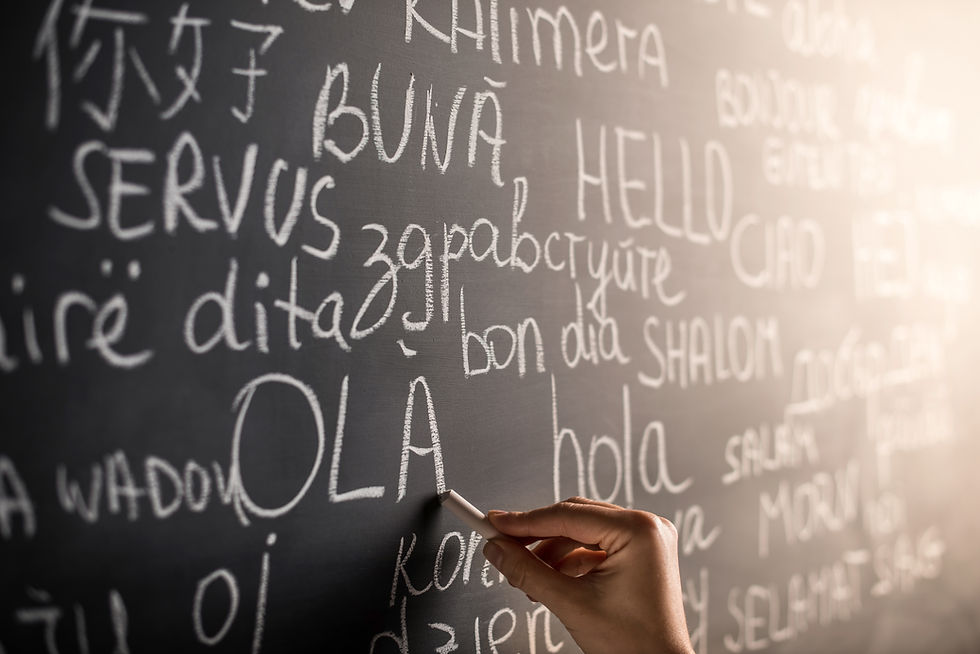
1. Students Must Speak More Than the Teacher
One of the most common traps in language teaching is indeed letting the teacher dominate the target language. Even the most fluent French, Spanish, or German sounds beautiful, but if students are silent, learning isn’t happening.
The hallmark of a great lesson is when learners are producing the language themselves, making mistakes, correcting each other, and gradually gaining fluency. To achieve this, structured opportunities for speaking are essential.
Practical examples:
Classroom routines
Speed-dating conversations: Students rotate partners every few minutes, asking and answering questions on familiar topics like hobbies, weekend plans, or school life. Each interaction is short but intensive, giving everyone a chance to speak repeatedly building spontaneity and fluency.
Information gap activities: One student has information that their partner needs. For example, student A has a timetable, student B has a list of questions. They must communicate to complete the task. This mirrors real-life use and encourages authentic dialogue.
The teacher’s role is to facilitate, scaffold, and model tricky vocabulary or phrases, not to dominate. When students’ voices fill the room, learning is happening organically.
2. Real Communication Outweighs Worksheet Practice
Worksheets, exercises, and drills are not without value, especially for consolidation. However, language becomes memorable when it’s used with purpose. Repetition alone is insufficient; repetition with meaning makes language stick.
Practical examples:
Role-plays with stakes: Students act out a scenario such as ordering food at a café, booking a hotel, or asking for directions. The unpredictability of real interaction forces them to think on their feet and use structures meaningfully.
Problem-solving tasks: Students might plan a weekend trip in TL, negotiate who will do what, or decide on an itinerary. They are compelled to use vocabulary and grammar in context, making the learning relevant and memorable.
“Find someone who…” activities: Instead of merely reciting sentences, students search for peers who meet certain criteria (e.g., “Find someone who has visited Germany”), creating genuine communication.
The key is purpose. When language is connected to a task or problem, students are far more engaged.
3. Grammar Needs Clarity, Not Mystery
Grammar often divides opinion in MFL teaching. Some believe students should “discover” patterns themselves, while others advocate explicit instruction. In my experience, clarity always wins and a careful balance between the implicit and explicit is needed. We teach in many different context and very diverse classes, so our approach should be also adapted to the students in front of us. My higher attaining students definitely want to know the WHY.
Students learn best when rules are explained concisely and immediately applied. This doesn’t mean dumping endless tables of verb endings; it means short, clear explanations, illustrated in context, followed by purposeful practice to ensure transfer and application, so grammar doesn't exist in isolation.
Practical examples:
Mini-grammar focus: A five-minute explanation of the difference between passé composé and imparfait in French, followed by a short storytelling exercise using both tenses.
Embedded grammar practice: Students describe images or sequences of events in Spanish using new verb forms, integrating grammar directly into meaningful communication.
Lexico-grammar - see my previous post on this here and here.
The goal is automaticity. Grammar becomes a tool, not a barrier.
4. Vocabulary and Grammar Should Be Interwoven
Too often, lessons treat vocabulary, grammar, reading, writing, listening, and speaking as separate strands. But fluency grows when these elements are integrated. Students retain words and structures more effectively when they encounter them in multiple contexts.
Practical examples:
Dictogloss: The teacher reads a short text, students take notes, then reconstruct it in small groups. This simultaneously reinforces vocabulary, grammar, and listening skills.
Thematic projects: For example, a “My Ideal City” project in German where students research, write, and present. They learn vocabulary for places, use adjectives, practice prepositions, and speak about their city.
Integration encourages students to see language as a system, not isolated parts, which strengthens fluency and recall.
5. Culture and Creativity Are Essential
Language is inseparable from culture. Lessons that ignore context risk producing students who can recite grammar and vocabulary but cannot communicate meaningfully in real life. Embedding culture increases motivation, retention, and engagement.
Practical examples:
Authentic resources: Newspaper articles, song lyrics, podcasts, and YouTube clips provide exposure to natural language and real-life context. Analysing a French rap song or a Spanish travel vlog, for instance, can spark discussions about culture, identity, and language use. The caveat here is to make sure the authentic resource is accessible, in other words, adapted in a way, students can understand and use it.
Creative projects: Students produce short videos, podcasts, or blog posts in the target language about a festival, tradition, or local event. They apply language skills in authentic, creative ways.
Cultural comparisons: Lessons can explore differences and similarities between countries. For example, comparing school routines in Germany and the UK encourages discussion in the target language while broadening cultural awareness. My students love listening to the cultural differences and the discussions we have (not necessarily in TL) are always very rich.
Culture is not an optional “add-on”; it gives language meaning and makes learning memorable.
6. Judging Lesson Quality
I have to agree with Ian here too, I also rarely assess lesson quality based on objectives on the board. Instead, I look for impact and evidence of genuine engagement. Indicators of a strong lesson include:
Students speaking more and working harder than the teacher.
Communication is meaningful - not just repetition or recitation of pre-learnt chunks.
Structures and vocabulary appear naturally in students’ output.
Students can still use the language after the lesson and in consecutive lessons.
Risk-taking is encouraged: learners experiment with new words or phrases, even imperfectly. They learn from mistakes and have the 'I can' attitude.
All four skills - listening, speaking, reading, writing - are integrated meaningfully (however, this doesn't mean they have to listen to a recording every lesson for example).
Cultural content is integrated and encountered, it is not just about content coverage.
Students are engaged and experiencing success.
As he says, the best lessons often feel slightly messy. Mistakes are frequent, and the teacher doesn’t control every moment (this can be difficult for many of us, not controlling everything) - but that is precisely where learning flourishes.
7. Designing Lessons with Purpose
To translate these principles into practice, I always consider the following framework for lesson planning:
Set a communicative goal: I start with a clear purpose, e.g., “Students will plan a weekend trip in Spain and present it to a partner.”
Activate prior knowledge: I begin with a quick retrieval practice task, using a quiz.
Introduce new language clearly: I highlight key vocabulary and structures in context.
Move from guided and deliberate practice: I begin with structured exercises, then progress to independent or paired practice.
Monitor and feedback: I circulate, listen, prompt, and correct constructively.
Embed creativity and culture: I try to include tasks that also require personal choice or cultural awareness.
Conclude with reflection: I have students demonstrate their learning or summarise key points.
This framework helps ensure lessons are engaging, meaningful, and sustainable for GCSE preparation and beyond. Please, note that this is a framework for a sequence of lessons not just one lesson.
8. The Heart of a Great MFL Lesson
A great MFL lesson is student-centred, purposeful, and connected to real-world communication. It balances input, practice, and creativity; it integrates grammar, vocabulary, and skills; it normalises mistakes as learning opportunities. Most importantly, it leaves learners feeling capable, curious, and confident in another language.
I’ve witnessed lessons where students could speak continuously, create their own content, and laugh at their mistakes - and the learning stuck. These lessons may not look perfectly tidy, but they are effective in ways that exam scores and objectives alone cannot capture.
As GCSE season approaches, remember: a truly great lesson isn’t about “covering the syllabus” - it’s about helping students use the language in ways that matter.
I’d love to hear from other language teachers:
How do you make your lessons purposeful?
What strategies help students speak spontaneously?
How do you balance explicit grammar teaching with communicative freedom?
Language learning is too valuable to be passive. Great lessons make it active, creative and alive.


Comments